 FR
FR NL
NL EN
EN ES
ES PT
PT
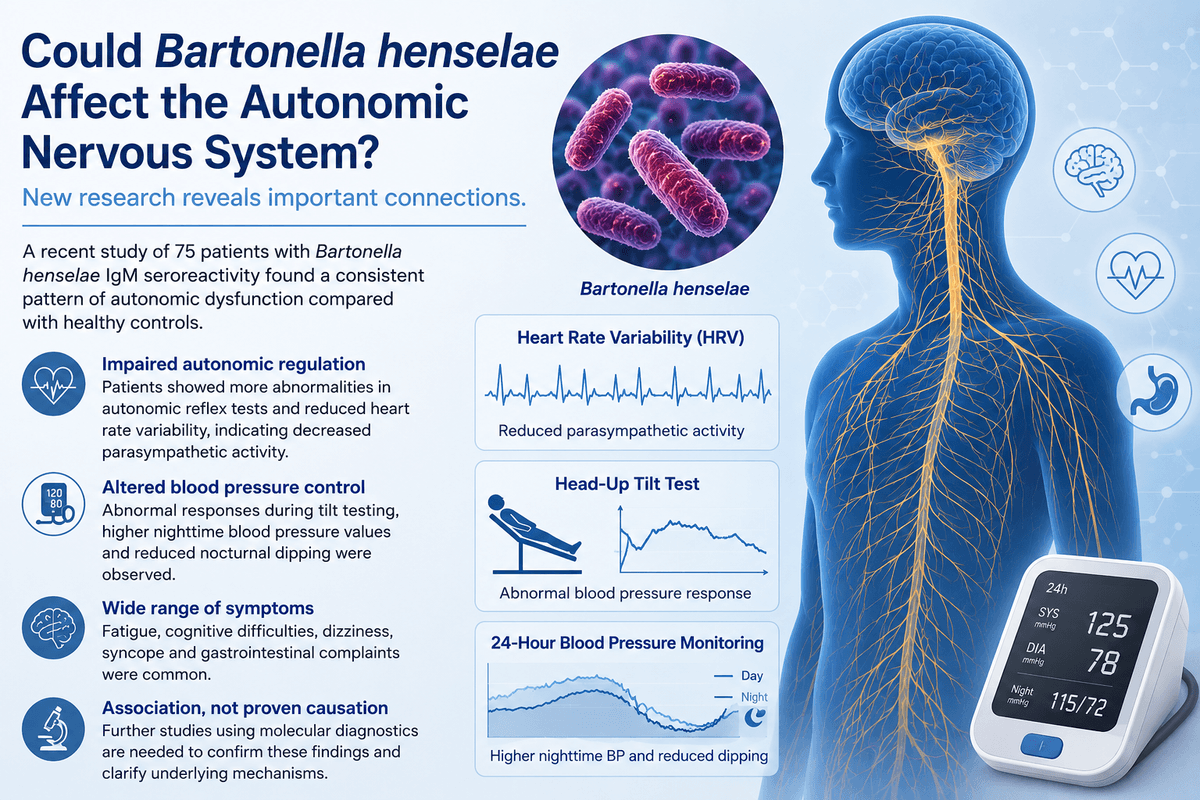
Bartonella henselae, the bacterium most commonly associated with cat scratch disease, is increasingly recognized for its potential to cause a much broader range of clinical manifestations than previously thought. While the infection is classically linked to fever and swollen lymph nodes, growing evidence suggests it may also be associated with neurological symptoms and autonomic nervous system dysfunction.
A recent study published in Pathogens « Autonomic Dysfunction in Patients with Bartonella henselae IgM Seroreactivity: A Cross-Sectional Study » investigated autonomic function in 75 patients with Bartonella henselae IgM seroreactivity who presented with persistent symptoms such as fatigue, cognitive impairment, muscle and joint pain, dizziness, syncope, and exercise intolerance. Their results were compared with those of 75 healthy individuals using cardiovascular autonomic reflex testing, heart rate variability (HRV) analysis, 24-hour blood pressure monitoring, and head-up tilt testing.
The findings revealed a consistent pattern of autonomic dysfunction in the Bartonella group. Patients demonstrated significantly more abnormalities in autonomic reflex tests and reduced heart rate variability, indicating impaired parasympathetic nervous system activity. In addition, many participants showed abnormal blood pressure regulation, including orthostatic hypotension, pronounced blood pressure variability during tilt testing, higher nighttime blood pressure values, and reduced nocturnal blood pressure dipping. Together, these results suggest that Bartonella henselae infection may be associated with alterations in the body's ability to regulate cardiovascular function.
The study also highlighted the wide range of symptoms reported by affected patients. Chronic fatigue, malaise, memory problems, cognitive difficulties, headaches, and gastrointestinal complaints were common, with approximately one-third of participants meeting the criteria for myalgic encephalomyelitis/chronic fatigue syndrome (ME/CFS). Although these findings support a possible link between Bartonella infection and persistent multisystem symptoms, they do not establish a direct causal relationship.
Nevertheless, this research contributes to the growing understanding of Bartonella as an emerging pathogen with potentially significant effects beyond classical cat scratch disease. For diagnostic laboratories and healthcare professionals, it highlights the importance of considering Bartonella infection in patients with unexplained fatigue, autonomic symptoms, or neurological complaints, particularly when there is a relevant exposure history. Continued advances in laboratory diagnostics and clinical research will be essential to improve the detection and understanding of these complex infections.


